Introduction:
Begin by explaining the basic concept of verbs, which are action words in a sentence. Emphasize that verbs can be classified into two main types: transitive and intransitive.
Part 1: Transitive Verbs
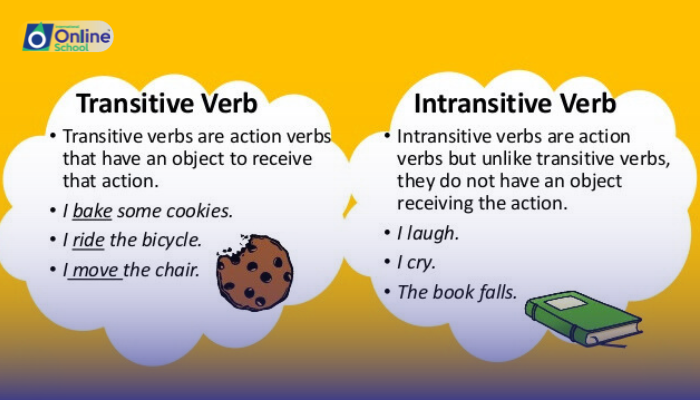
Definition: Transitive verbs are action verbs that transfer their action to a direct object. In other words, they need a direct object to complete their meaning.
Examples:
She bought a new book. (Verb: bought; Direct Object: a new book)
He ate the delicious cake. (Verb: ate; Direct Object: the delicious cake)
They built a sandcastle. (Verb: built; Direct Object: a sandcastle)
We watched the movie last night. (Verb: watched; Direct Object: the movie)
I sent an email to my friend. (Verb: sent; Direct Object: an email)
Activity:
Ask students to identify the transitive verbs and their direct objects in a set of sentences.
Part 2: Intransitive Verbs
Definition: Intransitive verbs are action verbs that do not require a direct object to complete their meaning. They express a complete thought without the need for a receiver of the action.
Examples:
The cat jumped onto the table. (Verb: jumped)
The sun shines brightly. (Verb: shines)
They laughed at the funny joke. (Verb: laughed)
She slept peacefully. (Verb: slept)
The birds sing in the morning. (Verb: sing)
Activity:
Encourage students to identify intransitive verbs in a given set of sentences.
Part 3: Using Transitive and Intransitive Verbs in Sentences
Guidelines:
Transitive verbs need a direct object to complete their meaning.
Example: She read a book. (Transitive verb: read; Direct Object: a book)
Intransitive verbs do not require a direct object.
Example: The baby cried. (Intransitive verb: cried)
Activity:
Provide a list of verbs and ask students to create sentences, ensuring they use transitive verbs with direct objects and intransitive verbs appropriately.
Review the key points about transitive and intransitive verbs. Encourage students to practice identifying and using these verbs in their writing to reinforce the concept.
